



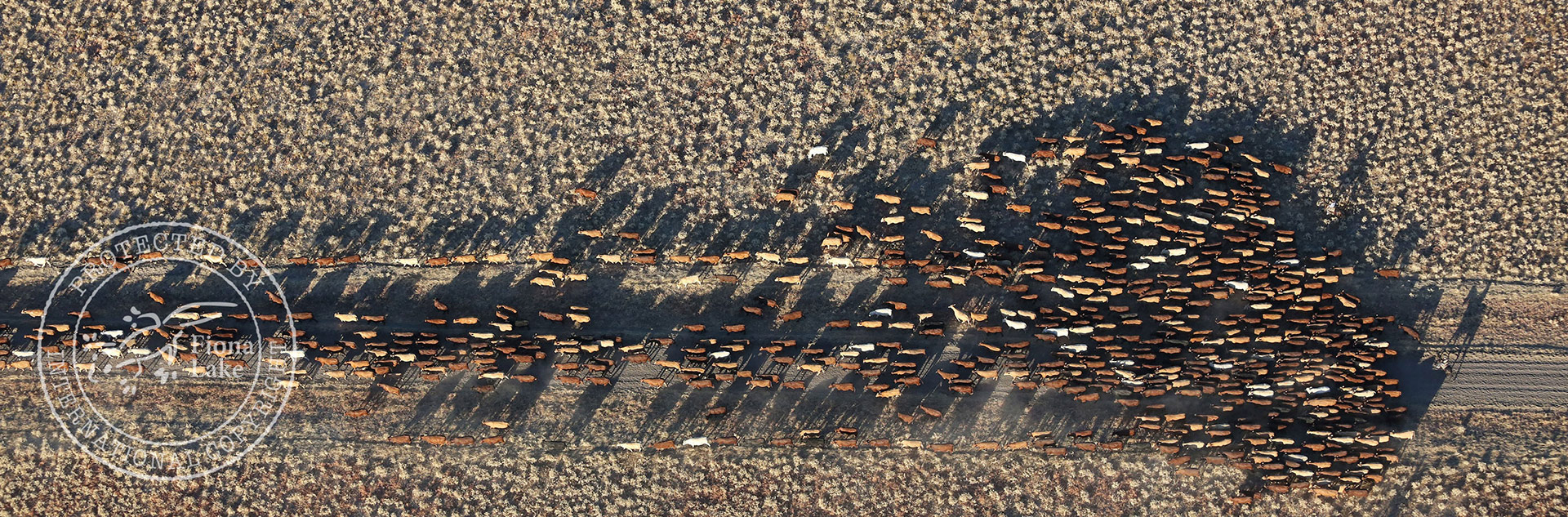

The domestication of cattle began thousands of years ago well before the birth of Christ. Perhaps it was around the same time that horses were domesticated, or not long after.
Today’s Bos Taurus (European breeds) and Bos Indicus (Zebu – originating in India) are descended from their extinct European forebears the Bos Primigenius (Aurochs). The list of words for ‘cow’ in different languages gives clues as to the routes taken by cattle when taken to different countries.
The World’s Beef Industry
Beef cattle are raised in many different countries. The cattle stations (‘ranches’) that cover the largest area and run the most cattle are located in specific regions of North and South America and in central and northern Australia. Parts of Southern Africa also have cattle properties that have a lot in common with Australian cattle stations.
At the time of writing, Brazil is the world’s largest exporter of beef with Australia second, followed by Argentina, Canada and New Zealand. The U.S. is the largest importer of beef because although they produce a lot, America is also the largest consumer of beef.
World production, exports and imports vary constantly due to climatic conditions and diseases such as BSE (‘Mad Cow’ disease; Bovine Spongiform Encephalopathy) and FMD (Foot and Mouth Disease).
In land area terms the largest cattle stations (ranches) are found in Australia. This is primarily because it is the driest and oldest continent on earth and sparsely settled, so large expanses of land are needed to support sufficient numbers of cattle to earn a reasonable living (transport costs are very high). These huge cattle stations are located in relatively remote areas. In land-area terms, both the largest cattle station in the world and largest sheep station in the world are located in northern South Australia, the driest state in Australia, where the carrying capacity is very low.
Livestock on these cattle stations are born, raised and fattened with very little impact on the natural environment because they are on native grassland in huge paddocks measuring many kilometres across. Due to the distinct wet/dry season there is relatively little trouble with diseases and parasites so scant chemical treatment is required. Tick-free regions such as Queensland’s Channel Country are naturally organic, and have always been so. Australia’s northern beef industry has relatively little impact on the natural environment and is arguably the most environmentally friendly farming industry in Australia – and these vast cattle stations are undeniably very efficient producers of protein.
Increasing numbers of young cattle are trucked hundreds of kilometres away to feedlots and finished on grain (farming seasons permitting), and in times of drought these cattle stations start to offload cattle quickly – to well grassed country elsewhere, feedlots, saleyards or direct to meatworks.
The majority of the very largest cattle stations in the world only run cattle, they don’t grow crops or have any other sources of income, apart from some in America that are dependent on oil for profitability.
The Australian Cattle Industry
There is a vast difference between the mobs of 1000 or more grazing on natural pastures in the extreme wet and dry season climate of northern Australia and the more intensive farming and agricultural land found in the relatively temperate four-season climate of southern Australia.
The most obvious difference is that the climatic and environmental conditions of northern Australia favour large mobs of long-legged smooth-coated Bos Indicus based cattle breeds (Brahmans, Santa Gertrudis, Droughtmaster etc) while softer Bos Taurus based breeds (Herefords, Angus, Murray Greys etc) are commonly chosen for tick-free more closely settled areas in the south. In Queensland there are not many European breeds found above the tropic of Capricorn, but in the Northern Territory Herefords are run a few hundred kilometres north of Alice Springs, in areas of lower humidity.
The first European settlers tried running sheep over much of far northern inland Australia but problems with speargrass seeds and marauding dingoes saw the mobs of merinos moved south into areas where wool growing has been much more successful, such as the open downs country and mulga country.
There are regions that contain native ground covers, bushes and trees that sometimes poison stock, such as Ironwood and Whitewood. The most significant poisonous tree is a certain type of gidyea (acacia georginae) found around the Georgina River (NT/Qld border region). It contains fluoroacetate, which is the active ingredient of 1080, the poison commonly used to kill environmentally damaging feral animals such as pigs and rabbits. Because fluoroacetate occurs naturally in plants such as Georgina gidyea and Heartleaf poison bush, native animals are less susceptible than introduced species, and it is broken down by water and naturally occurring bacteria. Georgina gidyea has been researched for many years and there are a lot of interesting articles on the internet. For example page 4-5 of the March 2003 Alice Springs Rural Review discusses the likelihood that plants are able to alert surrounding plants when they are ‘under attack’ (i.e. being eaten, cut down or damaged in some way). Because Georgina gidyea causes large stock losses at unpredictable times, there is research into a naturally occurring ruminant bug that digests fluoroacetate.
Tags: Australian Beef Industry, Conservation and the environment