



Mcleod’s Daughters Television Programme
Unique outback photography books featuring Australia's largest & most famous cattle stations.
These 3 coffee-table style books are designed to be a set. They contain more than 800 fascinating photos taken on nearly 60 huge cattle stations spread across the top of Australia.
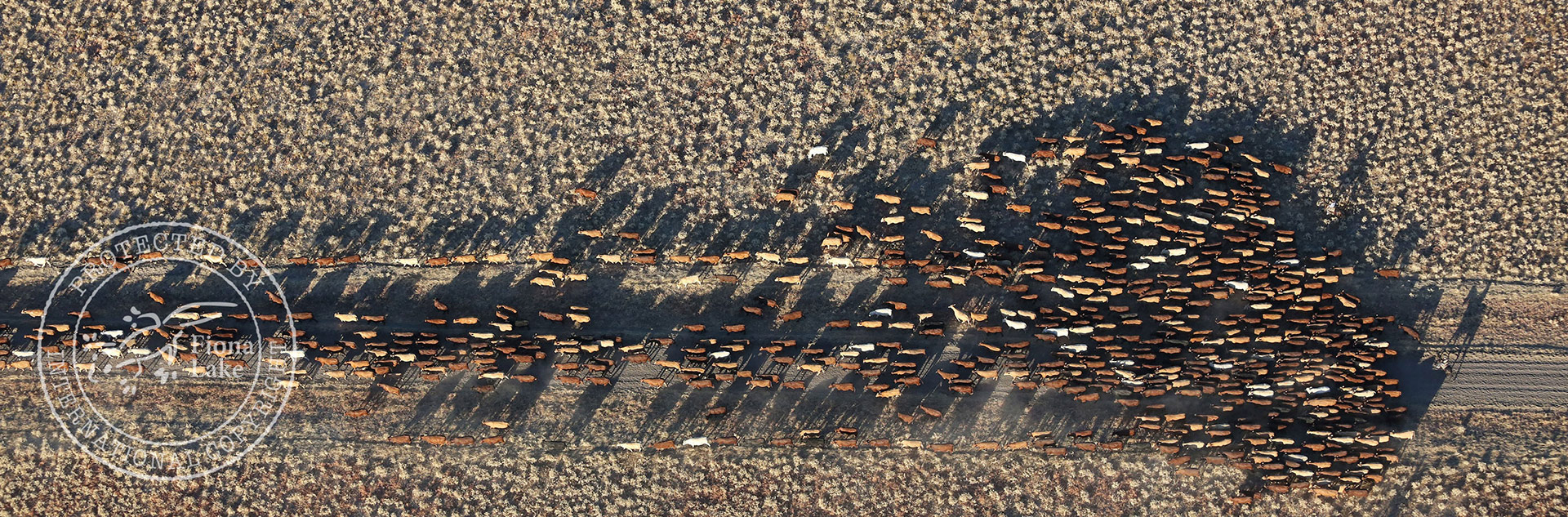
"Biggest Mobs - Longest Shadows" features the iconic Barkly Tableland, where the largest herds of cattle on the planet are found.
"Life as an Australian Horseman" is a best seller, running through a stockman's typical week on a variety of huge cattle stations spread across northern Australia.
A glossary is included in "A Million Acre Masterpiece" and these photos of outback cattle stations date back to 1984.
These authentic outback books are enjoyed by a wide range of people - read what other people think in testimonials. Or find out more about the book contents.
*PLEASE NOTE*: As of 31 October 2022, these 3 outback cattle station books are no longer available for purchase via the website. Please use the contact form if you have any queries.

Special offers
Orders for 2 or more books receive a great discount plus a free carrybag (when in stock).
Overseas orders - for 1 or more books - receive a free carrybag (when in stock).
Corporate orders - generous discounts apply to bulk orders - ask for a quote.
The final episode of McLeod's Daughters screened on Channel Nine on Saturday 31st January 2009.
I always thought of McLeod’s Daughters viewing as ‘essential research’. However every year or two there was talk it would be discontinued due to the high cost of production, and I realised how much I’d miss it.
Now the last series really has been discontinued. Writer Posie Graham-Evans has put down the pen, the last episodes were filmed earlier in 2008, and screened in January 2009.
McLeods Daughters, especially the earlier episodes, was enjoyable watching and I believe it has done a great deal to raise the profile of the bush in the suburbs. The reality is that there are only so many stories that can be written within certain constraints of location, characters, budget, etc, so it seems smart to conclude the eight-year-long run before the quality deteriorated markedly, rather than absolutely flog it to death, and end up producing poor quality viewing.
To my knowledge there has never been a rural-based drama like McLeod’s Daughters. It was unique. Writer Posie Graeme-Evans has been quoted as saying she originally pitched the idea to television executives as ‘a feminist Bonanza, with gags’. For those too young to remember — Bonanza was a classic, very blokey American western television drama series that ran for an impressive 14 years, 1959–1973, featuring well known actors such as Lorne Greene and Michael Landon. So Posie’s reference to Bonanza probably had a lot to do with the age of the people she was pitching the idea to (there’s a very good chance these blokes were once small boys on the lounge room floor in front of a black and white tv, imagining themselves galloping horses across Bonanza’s Ponderosa Ranch), not just as a good way of explaining exactly what she envisaged.
Any observant rural resident will tell you about the reality glitches in McLeod’s Daughters. But the research was relatively thorough and there were many very typical characters on the show. In fact one was so like a relation of mine, it was very disappointing when she left the series fairly early on. And the vet Dave Brewer was a classic — we’ve known blokes who have trotted out cheeky lines like his. In fact all the characters would have parts of people that the average Australian knows — and likes. Although at times the McLeod's Daughters characters have been so forgiving, they surpass all hope of being realistic. Unfortunately in real life people just don't forgive and forget and move on, especially in the bush - where feuds are sometimes maintained for several generations.
Quite a few very topical rural issues were written into McLeod's Daughters — for example the unmanageable costs associated with maintaining historic homesteads, the difficulties involved in organic farming and the struggle to retain ownership of long-held family farms after divorce. (There are plenty of people around who if they had to make a choice, would actually choose to keep the land rather than their spouse. The love of the land runs so deep it is a fundamental part of a person’s character. They would prefer to find a new spouse than to part with the land that has been in their family for generations.)
The McLeod’s Daughters office was very typical — the late model computer sitting on an old wooden desk, surrounded by walls hung with ancient photographs of prize bulls or long-dead race winners. Rural houses, furniture and land sometimes make farmers look misleadingly affluent however the reality is that the assets of most farmers and graziers have been steadily built up over many generations of very tight business management. Often luxuries such as holidays have been scarce or even non-existent. Many tradition Australian farmers are of Scottish descent, living by the 'look after your pennies because the pounds look after themselves' motto. Recycling has always been a way of life in the bush, as has very careful spending. Traditionally most farmers have bought quality, looked after it and expected it to last many years, so a lot of what they own — including clothing — is many years old. They make their money work as hard as they do! Unfortunately, this apparent affluence has dazzled many a suburban 'acre chaser' over the years, who has learnt, too late, that the wealth they found so enticing when falling in love with their 'country squire' husband, actually took generations to build up, and would dissipate very rapidly if not handled carefully.
Only the mentally tough survive the inevitable difficult periods caused by droughts, floods, insect plagues, diseases, bushfires, high loan interest rates and low commodity prices. There is a well-known saying in the bush ‘shirt sleeves to shirt sleeves in three generations’. Meaning that the first generation slaves and saves and builds a farm up, the second generation looks after and consolidates what the parents created, and the third generation, without their forbear’s self-discipline or drive, squanders it. Unfortunately, too often, it has proven to be true.
Because there is such a gap between Australia's city and country dwellers it is an almost impossible task to produce writing that will do an ideal job of satisfying both urban and rural audiences. Rural residents would have liked to see more meat on the bones of the issues raised in McLeods Daughters. They’d also liked to have seen more genuine work being done and have worried that McLeod’s Daughters gives the misleading impression that rural people spend a lot more time socialising - running in and out of town and after local bachelors - than could ever be possible in real life. But too much reality does not of course make good television entertainment, and there’s no point to it if people don’t watch. So keeping both audiences satisfied is an almost impossible balancing act.
I hope rural residents and decision makers made time to watch McLeod’s Daughters and consider it seriously because it was the only source of rural information on television, apart from the ABC’s Landline programme and occasional doom and gloom stories skimmed over on news bulletins. News bulletins too often do more harm than good. They raise more questions than they ever answer, and unfortunately usually portray farmers as a bunch of wealthy whingers or uneducated rednecks, as there is no time or inclination to adequately explain issues. Education is more effective through non-fiction, especially these days when younger generations so quickly lose patience with 'dry' information.
It makes good sense to understand information sources, if only to nip false impressions in the bud. Australia is the most urbanised country in the world and is becoming more so, with one in four Australian citizens born overseas. Most migrants do not settle in regional areas - they settle in the largest cities, and in particular parts of these cities. Unfortunately there's not even sufficient opportunities to be fully immersed in Australian society, let alone obtain a first hand understanding of the bush, its historical importance or its continued significance. It is the attitudes of voters in urban regions that will increasingly determine policies that govern the lives of people living in remote areas.
When the supermarkets are always full it is all too easy to forget our lives are utterly dependent on food produced in regional areas, and our current lifestyles are also dependent on agricultural and mining export income. Apart from McLeod’s Daughters and Landline, where else has the general public been able to easily obtain basic rural information? Most simply aren’t able to gain personal or hands-on experience. People who are completely unfamiliar with the bush are much better off for having watched McLeods Daughter’s and Landline.
In recent years many station managers and employment agency staff have told me they attribute increasing numbers of female applications for station jobs to McLeod’s Daughters. Some of these applicants can’t cope with the difference between their romantic vision and reality, some are just husband-hunting bimbos who don't like getting their hands dirty. But others take to rural life like a duck to water. Anyone whose natural character is to be independent, resourceful, hard working and practical is likely to get great satisfaction out of living and working in the bush. It is not easy to make the leap and begin a career in totally unfamiliar territory so I am pleased that for 8 years McLeod’s Daughters encouraged people to do so. Anything that has helped to bridge the increasing divide between urban and rural cultures, and helping people find their niche in life, should be applauded and supported.
Of course there were substantial differences between McLeod’s Daughters and everyday reality. The average Australian farmer is around retirement age and just as in any other avenue of employment they spend large slabs of time working on solitary jobs that wouldn’t make riveting television viewing, such as ploughing through acres of essential paperwork. Much as I love the life, everyday reality wouldn’t be great entertainment on the night-time box. Beanies and gumboots are de rigueur for many farmers in far southern Australia in winter and there’s usually not a horse to be found for miles. Instead mustering is done by motorbike or ute, with sheep or cattle dogs saving labour costs. Horses are only used for mustering if it’s the owner’s specific preference (eg they campdraft or enter rodeo events on weekends) or in very hilly or rough country.
However large cattle stations in northern Australia still run mobs of dozens of horses and are dependent on them to muster stock. During the dry season it’s horserider heaven because it is usual to spend 6-10 hours or more in the saddle each day. This means you get to know your horses better than is possible in any other field, though mustering is interspersed with long days spent working in the yards and on other jobs (from fencing to vehicle maintenance). At present there is a dire shortage of people who have any horseriding experience.
I encourage anyone considering taking up work in regional Australia to give it a go. The books 'Biggest Mobs - Longest Shadows', 'Life as an Australian Horseman' & 'A Million Acre Masterpiece' have hundreds of photos illustrating the typical life and work on Australia’s largest cattle stations, spread across northern Australia. 'A Million Acre Masterpiece' also contains a substantial glossary of words and expressions not commonly used in other parts of Australia - a must-read for anyone heading bush for the first time! Just as a McLeod’s Daughters episode doesn’t feature much of the dry stuff, such as essential business paperwork, my book doesn’t either. But the difference is, the photos in 'A Million Acre Masterpiece' and 'Life as an Australian Horseman' are authentic - real people doing real work. And this life and work on cattle stations continues, even though McLeods Daughters has come to an end.
At a time when Australia is sinking under the weight of films, television programmes and advertisements imported from other countries, in particular the U.S., it was great to see at least one programme had a lot of time, money and effort invested in producing what was a very good quality, very Australian drama series. Channel Nine should be given credit for producing McLeod’s Daughters and applying such attention to detail, eg filming on location rather than in a studio, and the South Australian Government should be commended for having supported a television programme that ultimately has had far reaching benefits for all Australians. The SA government has a good record of supporting ventures that benefit the bush, and the country as a whole. For example the SA Government’s 2002 Year of the Outback promotion was second-to-none.
Now that the last episodes of McLeod’s Daughters have been finally screened we have yet another cheaply-produced irrelevant import in its place, and we’re all the poorer for it. So remember McLeods Daughters was a drama, it was uniquely Australian, and the benefits were more significant than just being entertaining. And hope that future Australian Federal and State Governments will continue to support the making of films and advertisements within Australia - particularly featuring minority groups, eg people living in regional and remote areas.