



About Fiona Lake
 Who am I? These days, most of my time is taken up running drone workshops across regional and remote areas, speaking at international drone events, with some high-end commercial photography work squeezed in as I roam about. In 2022 it is 40 years since I sold my first photographs. A unique entrepreneurial business has resulted from combining drone usage (and more than 30 years of professional aerial photography experience) and agricultural knowledge (across a variety of ag industries and regions). These days my focus is on passing on what I've learned to others - drone pilots, photographers, people in agriculture and rural residents thinking of starting up small businesses, sometimes in the most remote parts of the continent. Valuable information that I wish I had been able to find out early on, but had to spend decades of hard graft figuring out.
I'd need another couple of lifetimes to get through all the ideas still clamouring for attention. On this page I answer a lot of the questions typically asked.
I grew up as Fiona McKindlay on an Australian wheat-sheep farm on the New South Wales side of the Murray River and after many years living on a variety of places spread throughout three states, now live in North Queensland. As long as I can remember I have been interested in:
- Art, craft and design
- Agriculture, sustainability and the natural environment (plants and animals)
- Books, language, history and the differences between cultures.
I've always been curious and loved roaming about and what I do now combines all these interests in a very satisfying way. I love what I do and feel fortunate to have ended up with a unique business. But it has not been easy and would not be for everyone.
There's 3 main options to weigh up when considering a career:
- Purpose-driven & ground-breaking - following what you care about most
- Well paid
- Secure (relatively predictable, low risk & few changes required).
What you choose must suit your personality and preferences. If you're lucky you'll strike gold and successfully land one of those options. If you're really lucky you'll get two, but it's usually a compromise between them. Almost nobody gets all 3, at least not for any length of time. In the 1980s I made a deliberate choice to pursue something different over-well paid & secure. Yes I have sometimes slapped myself around the head, since then, but here we are. Like anyone who has spent a lifetime in the arts will tell you - they did what they did because they couldn't do anything but.
Luck should never be confused with good fortune - there is a big difference between the two.

Entrepreneur or artist?
If you are in business, which one are you, have you thought about it? I was prompted to after reading an interesting article discussing the real difference between these personalities. Conclusion: I'm fundamentally an artist who constantly looks to address problems that aren't being addressed by anyone else, via creative endeavours. Which leads me into pioneering business territory, by accident.
I've been described as an entrepreneur but as some people interpret entrepreneur as someone primarily motivated by money, it's a risky term to use. Financially driven entrepreneurs see an opportunity and take risks building a business around it. They're strategic. Yes it will be to solve a problem but the primary end game is maximising profit. If someone makes a good offer to buy an entrepreneur's business, they take the money and move on. Other businesspeople think they are a genius and follow them on LinkedIn for pearls of entrepreneurial wisdom. Whereas artists are care-driven. Even if half-starving or offered good money for their business they will keep doing what they do because they're on a mission they believe in. They often have to choose between ethics and money and choose the former...unless their phone service is about to be cut off or their fridge is bare. They do have to make money in order to keep progressing their cause and can really struggle with compromising and objective business decisions.
The world of new business development needs both personality types. But unfortunately these two groups don't understand one another. Businesspeople view artists as flaky, hopelessly disorganised and poor business decision makers, hanging on even when the ship is going down. Artists view businesspeople as heartless granny-sellers who don't care about the environment, animals or people; who didn't get the memo about not being able to take it all with them to the grave. I'm wheeling out plenty of stereotypes here - but these are stereotypes I've encountered again and again over the 4+ decades since I started studying art at school. If I had been money-driven I'd have set up a stock standard (rather than entrepreneurial) commercial photography business on the coast or stayed employed by others - enjoying a much more stable income and relatively little risk-taking worry.
The business world tends to view artists as pointless expendables - despite art being the most effective means on the planet to influence opinions (why else have books been banned and burned, paintings confiscated, photography prevented and plays and films shut down?) Because artists are not taken seriously I've always been reluctant to be described as an artist.
Interestingly, these two personality types are found in all occupations - including agriculture. Many farmers are price-takers rather than price-makers. This is a fundamental sign of someone who is not purely profit-driven. Entrepreneurs will cut and run if the money side isn't panning out. It's why venture capitalists usually sell Australian agricultural holdings within a few years whereas family farmers persist. Artist-type personalities keep going because they care about what they do and believe their ulterior aims matter.
My business has always been based on addressing gaps. As soon as others are doing the same thing I move on to addressing a new need. I think of what I want to do, then try to find a way to make it pay - in order to achieve my main aims. Fundamentally - improving life for rural and regional Australians and helping the environment. Not fitting into a box has been problematic at times. Many in agriculture view me as an artist, not actually producing anything that is necessary; the art world views me as an agribusinessperson. When in fact I'm both.
Though most wouldn't realise it, there wouldn't be anyone involved in Australian agriculture today who hasn't seen some of my photographs.
Some milestones/history:
- 2022 - Inaugural Hall of Fame inductee, Women & Drones, presented at CES Las Vegas, January 2024
- 2021 - Received the Industry Award for Education & Safety from Australia's largest drone organisation, AAUS
- 2020 - Won the International Federation of Agricultural Journalists 'Star Prize for Photography', with a drone image. The IFAJ has more than 50 member countries.
- 2020 & 2021 - Both years, invited back to speak at drone conferences on 4 continents again (gathering experience and information I then bring home to share)
- 2018 - Named as one of 10 'Women to Watch in UAS' (drones), by Chicago-based Women and Drones. This was a global award - 10 women were selected from 7 different countries.
- 2017 - CASA Remote Remote Pilot Licence (RePL) & Remote Operator's Certificate (ReOC). (Less than 2 dozen Australian women were fully licenced at this time; less than 2% of the total.)
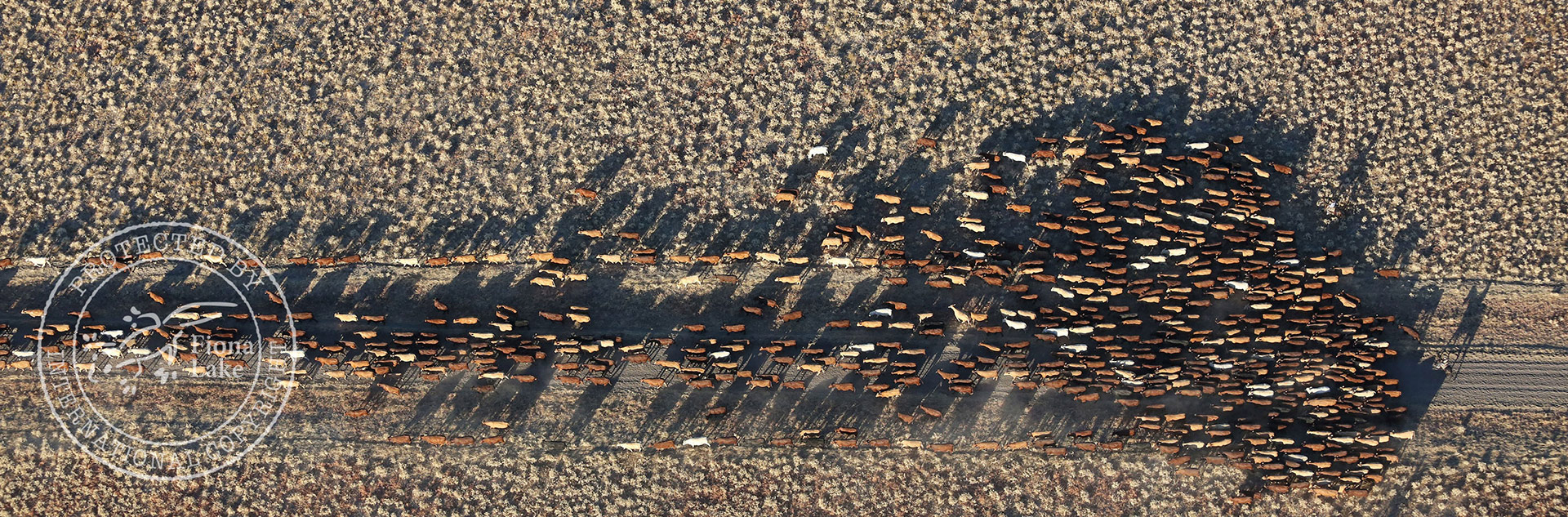
- 2015 - Published third book of cattle station photographs - featuring the region of Australia's largest stations and mobs of cattle - the Barkly Tableland.
- 2014 - First overseas speaking engagement, 'Farmers on Film' Festival, Nantwich, UK.
- 2013 - First worked on an overseas farm tour, run by Quadrant Australia
- 2013 - Changed from professional film photography to digital camera equipment
- 2011 - The National Library of Australian included this website in 'Pandora', an ongoing project which records websites deemed to be of cultural significance, in perpetuity
- 2009 - Published second book of outback cattle station photos, from the start of mustering to trucking cattle away.
- 2005 - Self-published the first book of cattle station photos, featuring properties spread across northern Australia and a glossary of unique words and expressions.
- 1999 - First solo art exhibition (Jupiters Casino, Gold Coast)
- 1999 - Visited Alexandria station, the second largest in Australia, & wrote my first station feature for R.M. Williams Outback magazine (many others followed)
- 1993 - Wrote & photographed my first national magazine story
- 1992 - Produced the first postcards featuring cattle station photos (& sold them across northern outback Australia, to inform tourists)
- 1988 - Started taking photos from helicopters (as well as from horseback)
- 1988 - Bought one of the early-model auto-focus SLR cameras (film - not yet digital) & bought my first computer (but first used computers in 1982).
- 1986 - Commenced working on a book of outback cattle station photos
- 1982 - Started selling photos. (Started taking photos on the farm I grew up on, in the 1970s.)
Why devote so much attention to large cattle stations?
I've loved photojournalism style photography ever since given a small film camera when in primary school, nearly 50 years ago. But much as I love photographing beauty, rather than just bury the world in yet-more 'pretty pictures', I have only ever been interested in creating images that have a purpose and tell a story. A story intended to make a positive difference to the world. In 1984 when I stepped out of the single-engine Cessna that flew me to the first cattle station I worked on, I knew - here was my purpose.
Here was a culture as different from the family farm I grew up on as it was from city life. Yet I didn't know it existed nor did anyone else I knew. This was frontier land, where development was relatively recent and career and ownership opportuities still abounded for the determined and hard working. But tucked away in sparsely populated regions, out of sight and out of mind - quietly producing good quality food, valuable export income and the type of witty characters that make Australia unique. There were almost no authentic images appearing in books and print media and certainly none that were accompanied by useful information. Visual imagery was instead created by fleeting visitors from capital cities, without any understanding of what was in front of them.
Life on these stations is still very different from how most Australians live. And, unfortunately - despite my best efforts - sometimes negative stereotypes, misinformation and disrespect still appears online and in the media. The job isn't finished yet, but I've largely handed the baton on to the plethora of dedicated rural photographers, scattered across the continent, who have flourished since the advent of digital photography and social media.

Despite everyone now owning a camera-not a lot is known about the specialist fields within the professional photography industry.
There are four main fields of professional photography and different personalities are drawn to each segment:
- Portrait photographers - specialising in photographs of people - weddings, families, school groups, events, corporate portraits. The most common type of professional photographer; spread across Australia. Most professional photographers who are women are working in this field. Mainly, B2C - and usually very good at spruiking their business. Ask me to photograph a wedding, and I can't run screaming fast enough.
- Commercial photographers - advertising/marketing image creation - from cars to fashion and food. Top-drawer specialists only found in capital cities and a few of the largest regional cities. A very specific field requiring a high degree of technical skill - re image capture & processing. The last bastion of photography training. Mostly blokes and very independent by nature, who don't market themselves much. B2B. Sadly, a thinning field.
- Photojournalists - capturing factual images that convey a story, with minimal digital manipulation - for editorial or marketing purposes. Tend to be cause-driven people who enjoy the challenge of creating an image that helps make the world a better place while at the same time being beautiful. Traditionally employed by newspapers and magazines, plus some freelance. Mostly B2B.
- Aerial photographers - aerial photography requires the same solid skills as on the ground, plus another layer of expertise. Doing a good job of aerial photography is a challenge - whether via a crewed aircraft or drone - and that's why I like it.
I avoid number 1 like the plague, 2 is highly specialised and urban focussed. I spend most of my time in 3 & 4- my forte.
There are also art photographers - capturing beauty just for beauty's sake. However due to the flood of better quality amateur photographs, no professionals would be making a living solely from art photography now. The world is already drowning under the weight of beauty for beauty's sake, even the best images are becoming like forgettable wallpaper. Just as the world now has more writers than readers, the world has more photographers than people who want to buy the work of others.
But still - owning a good quality camera does not make a professional photographer any more than owning flash kitchen equipment equals a Michelin-starred restaurant. There is still a role for professional photographers. Our brain interpret images in less than 1 second, long before words are read and understood. Good photographs still help make the world a better place.

My business now mainly includes:
- Running workshops and speaking at other events, mainly drone-related (but also photography and practical social media).
- Photography - primarily commission work that includes ground & aerial photography with drones
On the side, I am also involved in judging photography competitions and occasionally farm tour leading, as well as helping to promote agricultural and rural events (online).
Activities I used to be heavily involved in but have had to scale back due to market changes and economics (not lack of enthusiasm): writing & publishing books, magazine features, and holding photography exhibitions.
Please consider supporting the advocacy work I do in rural and remote areas by purchasing a book. This business was set up to self-fund advocacy - philanthropy isn't something bolted on as an extra; it has been the foundation of what I set out to do.
A comprehensive professional bio can be found on my LinkedIn profile - and there is additional information (not found elsewhere), in each book.
What is the 'outback'?
What used to be commonly known as 'the bush' is now usually referred to by those living on the coast as 'the outback'. Many people say you can't define it. But to me 'the outback' is a place where you can't see from one fence to another. Where all you can hear is the sound of the wind in the trees or grass and all you can smell is natural. Where you look around and can't see the 'hand of man' anywhere. Where it would have looked the same, more or less, 100 or 200 years ago.
Many extensive grazing properties are outstandingly well managed and there are few if any detrimental effects on the environment. Extensive grazing often has little or no impact on native wildlife, in fact sometimes birds and animals benefit (eg. from a reliable water supply) and increase in numbers. By comparison, there is enormous, ongoing environmental damage in our cities and native wildlife is virtually extinct in urban areas (apart from a handful of bird species, some small lizard species and possums).
Agricultural communities all over the world have a lot in common but unfortunately they also share the problems. Rural communities everywhere are rapidly undergoing fundamental, irreversible changes or they are under huge pressure trying to control or resist these changes. This pressure is exacerbated by extremist environmentalist and animal rights groups who are out of touch with the practical realities of natural life cycles. I am passionate about prompting people to think about who grows the food they eat and where it comes from, and encourage bridge-building between environmental campaigners and farmers, as there is so much to be gained from collaboration. It is an important responsibility to provide useful and accurate information to increase understanding and encourage mutual respect and maintenance of a healthy, evolving rural culture, worldwide. To pass on what I've learned over several decades I run workshops relating to best-practice rural advocacy and storytelling, which includes pitfalls to avoid. Details are in Rural Workshops.
Food producers keep us alive
After oxygen and water, food is the most critical element we need to survive. We must look after those who grow our own food, and our natural environment, if for no other reason than to ensure our own survival. It is vital that every person on the planet understands that every single one of the daily choices we make, affect the environment in some way - though the effects are not always right in front of our face.
The photographs and information on this website exists thanks to farm and station managers and owners allowing me to visit the properties they are responsible for. Thank you to everyone who has helped me to record life in rural and outback regions, and thank you to all those who do so in future.
Cultural changes and the importance of recording history in less closely-settled regions
The generation of men and women now in their 90s were born at the same time as the Royal Flying Doctor Service (RFDS) and raised in the depression years when wood-fired steam engines were pumping up bore water in remote areas. They went to school around the time of the Second World War and began work when bronco horses were used to brand calves, packhorses carted the camp gear around, drovers took weeks to deliver fat cattle to saleyards and abattoirs, and grain harvesters were pulled by horses. After the second world war, mechanisation really took off. Increasingly trucks were used to cart cattle instead of drovers and the beef crash of the 1970s had a lasting effect on cattle station employment. This is the generation my parents were in, and I was raised with a respect for what has gone before, and stories of how much things have changed - mostly for the better.
Despite the popular belief that changes just over the last decade have been huge - the reality is that the last century has seen monumental changes - from washing machines to computers and the internet to mobile phones and social media - and satellite services.
I began work on a cattle station in the early 1980s when the Brucellosis and Tuberculosis Eradication Campaign (BTEC) was in full swing. Millions of dollars was spent on running BTEC and it caused station owners to increase helicopter and motorbike mustering, fencing and yard building. Satellites beamed television into remote areas in the late 1980s and the development of reliable telephone and internet services through the 1990s brought significant social changes. Camping out is now becoming increasingly uncommon, windmills have all but disappeared in favour of submersible pumps and most timber cattle yards have been replaced by steel.
The biggest change - that has only gained impetus since around 2014 - is the increasing use of machines, only, to muster stock on large northern cattle stations. With only a few exceptions, replacing all mustering horses with motorbikes, buggies & choppers has been a retrograde step in terms of cattle management and stockmanship skills.
Australians born in the 1920s and 1930s (as my parents were) are unique and were nicknamed 'frugals' due to their capacity to work hard, save hard, their sense of community responsibility and stoicism. They just got on with it. They are a generation that will be sorely missed, both in rural and urban areas.
I've never been especially interested in formal museums. Instead I find living, breathing culture and practical skills and knowledge, and personal stories, infinitely more interesting. It is impossible to predict with certainty what changes tomorrow will bring, but the changes in the northern pastoral industry have been massive during the last thirty plus years. It is likely that robotic technology will become common in agriculture over the next couple of decades. Hopefully on weed eradication, to start with.
Many of the photographs I have taken have been unrepeatable just a year or two later.
We must learn to value more highly what we have today, and insist on marrying the best of the old with the best of the new.

Fiona Lake interviews - some podcasts & online video interviews:
- Agtech finder podcast with Olivia Calver; episode 15, February 2024
- Do you know Drones podcast; 'Is the drone industry past the hype'; one of the 13 people attending Commercial UAV Expo in Las Vegas, interviewed by Jason San Souci, Sept 2022
- Postcards from the Bush; 'Understanding Agtech'; interview with Robin McConchie, March 2022
- Women & Drones South Africa; 'Fireside chat' presentation then Q & A, with hosts Kim James and Louise Jupp; November 2021
- Illuminata podcast; (episode 17); interview by Charlotte Rambla and Emily Mantilla - two UQ PHD students, interviewing women involved in agriculture & STEM (science, technology, engineering & maths); June 2021
- Oz by Drone; Guest interview by Greg Kuhnert (from 22:42 until 48:21); November 2020
- The Drone Radio Show; 'From helicopters to drones - the successful aerial photography career'; interview with Randy Goers (USA), November 2020
- Farms Advice podcast; 'Flying drones across Australia'; interview with Jack Cresswell Episode 6; July 2020
- ABC News Breakfast; 'Aussie ag photographer scoops international award'; interview with Lisa Millar, June 2020
- CMA 'Wellbeing Wednesday' Fiona Lake interview; by Cynthia Mahoney & Louise Thomson (Victoria); Episode 7; May 2020
- 'Tourism & Agricultural Drone Photography' interview with Fiona Lake; by Chris Anderson, The Drone Trainer (Canada), podcast 115, March 2020
- Chicago-based Women & Drones; 'Meet drone photographer Fiona Lake', re Women and Drones 'Women to Watch in UAS' award, interview by Wendy Erickson (USA), August 2019
- Queensland Government '100 Faces of Small Business', interview with Fiona Lake, May 2018
- WiRE programme Fiona Lake interview, with Retha Wiesner (Qld), detailed business discussion; May 2017
Fiona Lake interviews - some links to written stories:
- Future Farming (Canada); 'Drone use and adoption across hemispheres'; written by Matthew McIntosh; May 2021
- International Federation of Agricultural Journalists; 'The story behind the image - Fiona Lake discusses her Star Prize Entry'; January 2021
- The Drone Girl 4/4; 'Speaking at virtual drone conferences vs in person'; interview with Sally French (USA), November 2020
- The Drone Girl 3/4; 'How to get paid to speak at drone conferences'; interview with Sally French (USA), November 2020
- The Drone Girl 2/4; 'How to give a great drone conference talk (and get invited back next year)'; interview with Sally French (USA), October 2020
- The Drone Girl 1/4; 'How to get booked as a drone conference speaker (from someone who has spoken across 4 continents)'; interview with Sally French (USA), October 2020
- Queensland Country Life newspaper, 'North Queensland photographers acknowledged amongst the world's best'; story on the International Federation of Agricultural Journalist's photography award win, 2020
- US-based Women and Drones 'She created the Rural Drone Academy in Australia'; newsletter story, 2020
- London-based Women in Food & Agriculture 'Challenging stereotypes and promoting women in the agtech space'; interview, 2019
- Weekly Times 'Women key to new technology soaring in agriculture'; 2018
- 'Women to watch in UAS'; Women and Drones, (USA) 2018
- Victorian Rural Women's network, 'Drones - more women set to fly high', newsletter story, 2018
- Women and Drones; 'Flying drones on Australia's largest cattle stations (ranches)', (USA), 2018
- Queensland Country Life newspaper, 'Whispering Grass' photography exhibition in Washington D.C., 2018
- Queensland Country Life; story by Helen Walker, 2017.
- The Australian Newspaper - Weekend Magazine; Story by Ross Bilton, 2016.
- Farmonline (Rural Press); story by Matthew Carwood, 2015.
- Australian Financial Review; story by Matthew Cranston, 2015.
- Grazi(her) feature; story by Claire Dunn, 2015.
- The Queensland Times; story by Felicity Forth, 2015
- Rural Press Club story on the International Federation of Agricultural Journalists 'Star Prize for Photography' win, 2007
- Australian Stockman's Hall of Fame exhibition opening speech by His Excellency Major General Michael Jeffery AC CVO MC, 2006
- ABC Television 'Landline' programme, feature story on Fiona Lake, 19 October 2003 (screened 11 times)

Some print media stories photographed & written by Fiona Lake (shortlist):
R.M. William's Outback Magazine stories:
- Dec 2017-Jan 2018, Cordillo Downs station story
- Aug-Sept 2017, Herbertvale Station story
- Jun3-July 2015, Leeton Pipe Band story
- Oct-Nov 2014, Fruit Forest Farm story
- June-July 2011, Station Life photo essay
- Aug-Sept 2008, Nockatunga station story
- Feb-Mar 2008, Lucy Creek station story
- Oct-Nov 2007, Glengyle station story
- June-July 2007, Heidi Douglas 'Adventure' Story
- Dec 2006-Jan 2007, Danny Hayes 'at work' story
- Dec 2006-Jan 2007, 'Longreach muster' at the Australian Stockman's Hall of Fame
- Aug-Sept 2006, Wave Hill station story
- Oct-Nov 2005, Wernadinga station story
- Dec 2004-Jan 2005, Lilyvale station story
- Oct-Nov 2003, Delta Downs station story
- Dec 2002-Jan 2003, Wrotham Park 'out there' story
- Feb-Mar 2001, Brunette Downs station story
- Feb-Mar 2000, Alexandria station story (written & photographed in 2009)
Photography, journalism & drone industry awards judge:
(Please note: sometimes links to external sites are broken as website page address details are changed, pages are removed or placed behind a paywall.)