



Translation For 'Stockman' & Other Cattle Station Employees In Other Languages
Unique outback photography books featuring Australia's largest & most famous cattle stations.
These 3 coffee-table style books are designed to be a set. They contain more than 800 fascinating photos taken on nearly 60 huge cattle stations spread across the top of Australia.
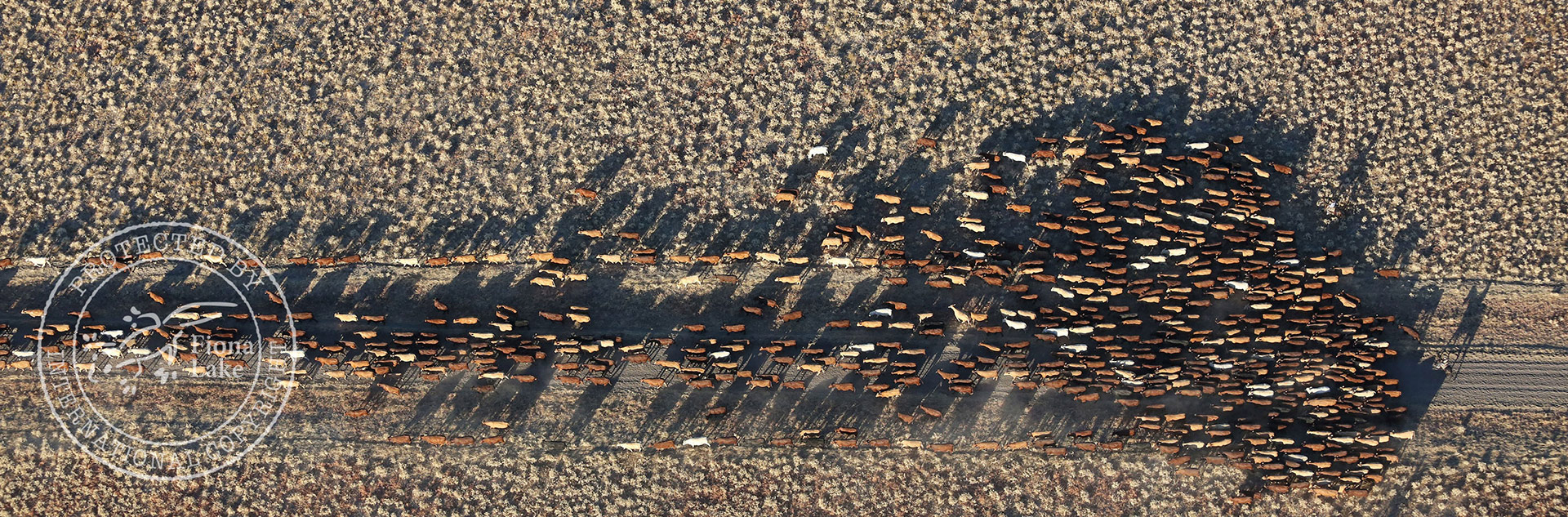
"Biggest Mobs - Longest Shadows" features the iconic Barkly Tableland, where the largest herds of cattle on the planet are found.
"Life as an Australian Horseman" is a best seller, running through a stockman's typical week on a variety of huge cattle stations spread across northern Australia.
A glossary is included in "A Million Acre Masterpiece" and these photos of outback cattle stations date back to 1984.
These authentic outback books are enjoyed by a wide range of people - read what other people think in testimonials. Or find out more about the book contents.
*PLEASE NOTE*: As of 31 October 2022, these 3 outback cattle station books are no longer available for purchase via the website. Please use the contact form if you have any queries.

Special offers
Orders for 2 or more books receive a great discount plus a free carrybag (when in stock).
Overseas orders - for 1 or more books - receive a free carrybag (when in stock).
Corporate orders - generous discounts apply to bulk orders - ask for a quote.
Single-word translations for the words used to describe people who work on cattle stations (ranches) can’t be precise, primarily because there are such substantial differences between the cattle grazing businesses in one country compared to another (size, operation, economics, social organisation, racial differences).
To complicate matters there are also regional differences in the precise meaning of words so some words understood to be a straight-up-and-down employment term in a rural region may be understood to be something quite different or even have connotations of derision or racial overtones in a nearby urban area or in a different country.
For example ‘cowboy’ has not had an agricultural meaning in Australia until recent years. It is commonly used today to describe someone who is viewed as incompetent or a dodgy operator, and is sometimes used by city dwellers to mean 'stockman', but is not generally used to describe people who work stock by actual residents of rural Australia. And the term 'charro', also used to describe the traditional, flamboyantly dressed cowboys of the Jalisco state of Mexico, is used as an insult in Puerto Rico (where a 'charro' is someone who is considered pathetic, undignified or gaudy).
Other examples of words with more complicated meanings are ‘vaquero’ and ‘gaucho’; usually translated as meaning ‘cowboy’ in many Spanish-speaking countries. But ‘vaquero’ and ‘gaucho’ are often used when referring to ‘cowboys’ of a particular race in South America, so it can have a more complicated meaning than just ‘cowboy’ as used in rural parts of America.
Experienced rural employees have a wealth of knowledge and skills but this is learnt on the job rather than in colleges or universities so this ability goes unrecognised in some circles. Such work is commonly referred to as ‘unskilled’ (particularly by urban academics).
Stockwork has always been a relatively low paid job so it is unfortunately common for some words for stockmen to have insulting connotations. A classic example of this is the word ‘peon’ (common in many South American countries) which doesn’t just mean labourer, it has social class implications. A ‘peon’ is on a par with ‘peasant’ or ‘serf’ and it usually has racial overtones as well — referring to the native Indian population.
In addition, some words are disappearing from everyday use because rapid rural changes worldwide over the last few decades — in particular, increasing mechanisation and rapid disappearance of stock horses. This means the nature of the job and/or the type of people doing the job has changed so much that the original word is no longer an ideal fit where it was once commonly used. Classic examples of this are the words gaucho’ (Argentina), ‘vaquero’ (Southern U.S.) and ‘ringer’ (northern Australia).
So it is essential to bear in mind the equivalents in different languages are approximate, only, and some of the terms are becoming uncommon or altered in meaning.
I have included terms from the Camargue because although these properties are relatively small in area they have a particularly historic tradition of horsemanship and cattle rearing continuing on today and which has a lot in common with younger traditions in Australia and the Americas.
Station (ranch) owners:
- Australia — no specific term, other than just ‘the boss’
- U.S. — ‘ranches’ are owned by ‘ranchers’
- Brazil — ‘fazendas’ are owned by ‘fazendeiros’
- Mexico — a 'rancho' is owned by a 'propietario del rancho' ('haciendas' and 'hacendados' are historical terms, no longer used in Mexico) or rancheros
- parts of northern South America — ‘haciendas’ are owned by ‘hacendados’
- parts of northern South America — ‘latifundios’ are owned by ‘latifundista’ (in Mexico it is now a historical term, no longer in use. It is probably increasingly uncommon elsewhere, also; eg Brazil, except when used with negative connotations)
- Camargue (South of France) — ‘manades’ are owned by ‘manadiers’
- Argentina — ‘patron’ (boss or owner)
- South Africa (Afrikaans) — 'veeboer' — cattle farmer/livestock farmer/grazier
People who are in positions of authority on cattle stations (ranches):
- Australia — ‘headstockmen’ and ‘overseers’
- U.S. — ‘foremen’ and ‘leading hands’
- Mexico & northern South America (eg Ecuador) — ‘mayordomos’ (overseers)
- Argentina — ‘capataz’
- Brazil — 'capataz', or 'encarregado, gerente'
People who are really just apprentices:
- Australia — ‘jackeroo’ and ‘jilleroo’ (or ‘jillaroo’, ‘jackaroo’)
- U.S. — ‘greenhorn’, ‘tenderfoot’
Words for more traditional/historic terms for very experienced specialists who work/worked with the cattle (blokes who usually don’t like farming at all, or fencing, mechanical and other tasks — they want to be working on a horse):
- Australia — ‘ringers’
- U.S. (southern) — ‘vaquero’ and 'buckeroo' (pronounced like va-que-ro)
- Argentina & perhaps some other South American countries — ‘gaucho’
- Hungary — 'csikos' (horsemen/cowboys of the Great Hungarian Plains or the 'Alfold'), descendants of the famous Magyar horsemen.
Experienced people who work with the cattle:
- Australia — ‘stockmen’
- New Zealand — 'shepherd' (someone who works primarily with stock, with either cattle or sheep)
- U.S. — ‘cowboys’ and ‘cowgirls’, ‘cowpokes’, ‘cowhands’, ‘cowpunchers’, ‘buckaroos’ (Canada also). 'Top hand' for someone who is good at the job (experienced, and good at it). Visit the Western Frontier Forum for some interesting comments on the origin of the word ‘ cowboy ’.
- Southern U.S. — southern Georgia and Florida — 'cracker'. (Unfortunately the term 'cracker' has since been given a negative connotation similar to 'redneck' (insult meaning poor white rural resident with little education, poor taste and low standards). And the term 'cracker', as used in the south, is often incorrectly said to have originated from the sound made by plantation owner's whips being cracked at slaves. In fact the term 'cracker' was the term bestowed upon drovers, cowboys and later cavalrymen due to the cracking sound of 10–12 foot bullwhips, used to move cattle. Just another typical example of a rural term being hijacked by the sector of society with an extreme social/political barrow to push...
- Spain — ‘vaqueros’
- Argentina — ‘vaqueros’, ‘gauchos’ and ‘paisanos’
- Guyana — ‘vacqueros’
- Chile — ‘huasos’
- Chile (Southern region - Patagonia) - 'baqueano'
- Mexico — ‘vaquero (ganadero)’.
- Mexican state of Jalisco — 'charros' — also the term for the highly skilled charreada (similar to a rodeo) participants. 'Charros' have traditionally worn flamboyant outfits (huge hats, tight trousers, fancy jackets etc), that have featured in a number of 'Westerns' (as in cowboy films). The famous mariachi music is believed to have originated in Jalisco, also. It is thought that 'cowboys' in the Jalisco state took on the name 'charros' because the term was brought by early Spanish settlers from the Salamanca region, where 'charros' means a native inhabitant of that area.
- Brazil — 'vaqueiros' (‘gaùchos’ probably no longer in use and/or more of an Argentinean term)
- Paraguay & Uruguay — ‘gauchos’
- Ecuador (Andean region) — ‘chagras’
- Venezuela & Colombia — ‘llaneros’ (which translates as ‘plainsmen’)
- Camargue (South of France) — ‘gardians’
- Hawaii — ‘paniolos’ (Note spelling variations between American countries of vaquero, vacquero and vaqueiro — English, Spanish and Portuguese.)
People who look after the station (ranch) horses:
Refer to ‘Translations for horse ’.
Words for people who walk mobs of cattle to other locations (either to market, to other cattle stations, or who feed them along stockroutes because their home is drought affected):
- Australia — 'drover'
- Southeastern U.S. (southern Georgia & Florida) — 'cracker'. Historical usage — now a 'Florida cracker' is generally meant to be a stockman/cowboy — also with an inference of being from a family whose forebears settled in the area a long time ago. 'Georgia cracker' is also used used for stockman/cowboy.
People who do general work on the station (ranch):
- Australia — 'stationhand' (required to do a variety of duties, not just stockwork)
- New Zealand — 'general hand' (required to do general property duties, not stockwork)
- New Zealand — 'shepherd general' (required to work with stock plus general property duties)
- U.S. — ‘hired hand’, 'ranchhand'
- Brazil — 'peao'
Southern U.S., Mexico & other Spanish speaking South American countries — ‘peon’ and some words similarly spelt such as ‘peòn’ (Argentina) and ‘peoes’ (Brazil) — usually infers a low-skilled labourer (in rural employment or otherwise); a ‘peasant’ with no assets, right down the bottom of the ‘social scale’. A derogatory word.
‘Peonage’ was akin to a feudal ‘serf’ or slavery system in which the peons were indebted to their employers and these debts could be inherited. Made illegal in the Mexico and South American countries where ‘peonage’ was common practice however apparently it continued in some places until relatively recently.
There always seems to be someone down the bottom of the pecking order in societies, rural regions included. In South America it has been the South American Indians. In America it has been people of Spanish descent — eg. Mexicans.
It is unfortunately true that just as many land owners look down on employees, traditionally 'graziers' (people who graze livestock for a living; especially woolgrowers) have liked to look down on those who farm (till the soil). And cattle owners have liked to look down on woolgrowers. In Australia, struggling farmers on small holdings have been referred to as 'cockies' (with derisive overtones). 'Sod busters' is the American equivalent. No doubt these class attitudes were unfortunate imports from the U.K. when the U.S. and Australia were first settled. These class divisions are subtle, but these attitudes are still quite distinct in parts of Australia where agriculture is more reliable and the population more stable. The harder the country is (unreliable climate, poorer soils), and the more company-owned properties there are (population that shifts around more) the less class distinctions exist.
Aboriginal Stockmen
In Australia aboriginal people used to make up the majority of the workforce on remote stations, however since the introduction of laws regarding equal wages and alcohol consumption several decades ago numbers have reduced to the extent that aboriginal stockmen are now the exception rather than the norm.
It should also be mentioned that prior to the introduction of laws regarding equal wages, substantial payments ‘in kind’ were usually made to the employees and large extended families from the youngest to the oldest. This usually included a degree of healthcare and education.
This in-kind payment system was of course abused by some unscrupulous employers as will unfortunately be found in any walk of life, but in most cases circumstances were much better than what has followed.
There is no doubt the leap from the old system to the new has been a health disaster and in many respects a social disaster for many station-dwelling aboriginal people. It may have been more successful if changes had been introduced gradually and with more thought and care.
These days quite a few cattle stations are owned and run by aboriginal people however as a whole the situation is still working through massive changes that may take many more generations to sort out. Even in remote areas where the indigenous Australians outnumber European Australians by more than 10 to 1, there are very few aboriginals in cattle station employment.
Rodeos
Escaramuza - a woman participating in a specific rodeo event in Mexico called Escaramuza Charra. It involves a group of women dressing in a specific way (complete with sombreros and beautiful flowing dresses) and riding horses - sidesaddle - in formation to music. No specific term in English as Mexico appears to be the only country where this sporting event is held.
Further Reading
The University of Texas Press has many interesting articles discussing the meaning of words, culture and history in southern America, Mexico and South America.
For example this article which discusses the meaning of words such as ‘criollo’, ‘mestizo’, ‘Indian’ and ‘cholo’. An interesting article by Marc Becker of Truman University, discusses rural uprisings in South America and the accurate translations of different words including the Spanish ‘campesino’ (roughly translated as ‘peasant’/'rural peasant').
Please note: the text on these translation pages is protected by copyright laws, like the rest of the website.
Many hours of work have been spent compiling these pages of translations, cross checking as much as possible, to ensure accuracy. But because I am not a linguistics expert all words and meanings translated here should be cross checked with other sources before being quoted, because I am not able to guarantee there are no errors.
The books 'Biggest Mobs - Longest Shadows', 'Life as an Australian Horseman' & 'A Million Acre Masterpiece' contain more than 800 photographs taken on Australia's largest outback cattle stations (ranches). Informative captions accompany the photos of Australian stockmen and women, ringers, stationhands, jackeroos, jilleroos, horsetailers, headstockmen, station managers and drovers at work.