



Rural Translations (Outback words & expressions)
Unique outback photography books featuring Australia's largest & most famous cattle stations.
These 3 coffee-table style books are designed to be a set. They contain more than 800 fascinating photos taken on nearly 60 huge cattle stations spread across the top of Australia.
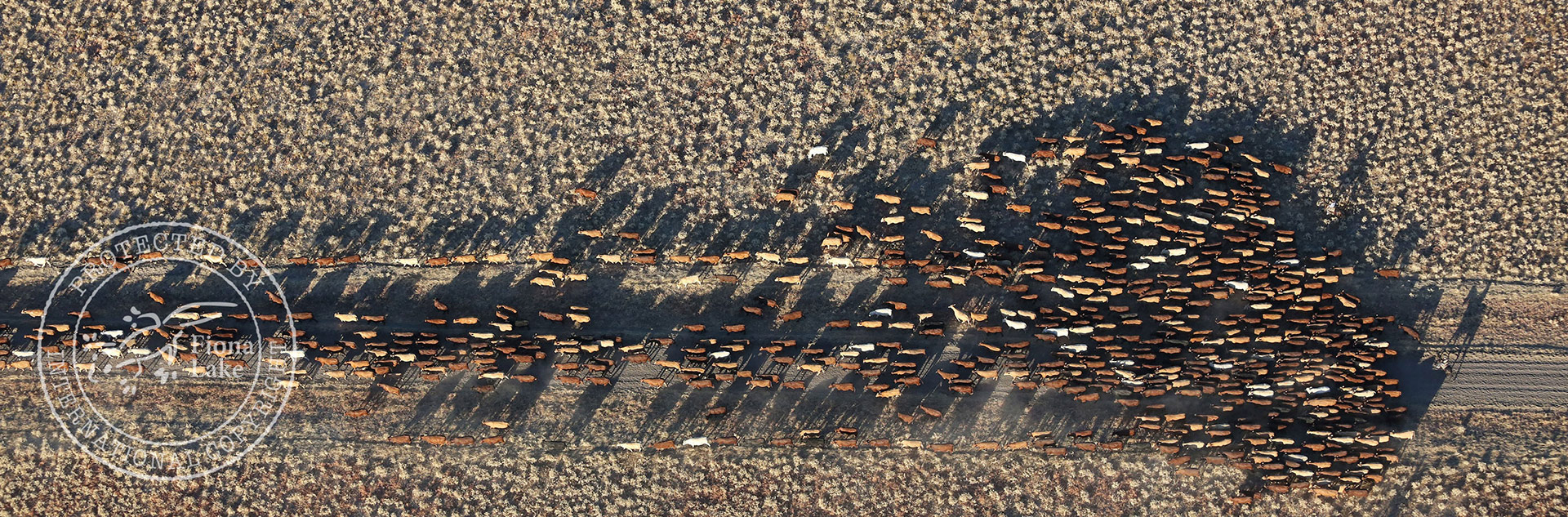
"Biggest Mobs - Longest Shadows" features the iconic Barkly Tableland, where the largest herds of cattle on the planet are found.
"Life as an Australian Horseman" is a best seller, running through a stockman's typical week on a variety of huge cattle stations spread across northern Australia.
A glossary is included in "A Million Acre Masterpiece" and these photos of outback cattle stations date back to 1984.
These authentic outback books are enjoyed by a wide range of people - read what other people think in testimonials. Or find out more about the book contents.
*PLEASE NOTE*: As of 31 October 2022, these 3 outback cattle station books are no longer available for purchase via the website. Please use the contact form if you have any queries.

Special offers
Orders for 2 or more books receive a great discount plus a free carrybag (when in stock).
Overseas orders - for 1 or more books - receive a free carrybag (when in stock).
Corporate orders - generous discounts apply to bulk orders - ask for a quote.
English is Australia's official language however there are many spelling, meaning and pronunciation differences between the English spoken in the UK, USA and Canada, and to a lesser extent, New Zealand. These pages list many of the colloquial and more standard cattle station and general agricultural terms used, with the closest equivalents used in other countries (including languages other than English). I.e. these are pages of translations (not dictionary-like explanations of meanings).
Rural Australia has a huge number of colloquialisms - quirky, unique words and expressions - beautifully illustrating the typically dry wit of rural inhabitants. Most of these words and expressions are completely unknown - or at least not understood - in urban Australia. These website pages do not contain explanations of these more specific Australian outback words and expressions. Descriptions of meaning for Australian words are instead found in the substantial glossary contained in the book 'A Million Acre Masterpiece'.
In particular, there are a very large number of terms used to describe people who work with cattle and stockhorses in these translations pages, due to specialisation within the livestock handling industry. Many of the differences between the meanings of these terms are only understood by people within the cattle industry, not the general community.
American writer Howard W. Marshall summed up the significance of language beautifully in his interesting book 'Buckaroo: views of a Western Way of Life': "Knowledge and use of 'buckeroo' separates insiders from outsiders". In the same way, a genuine understanding and comfortable use of the word 'ringer' has for many years been what separated 'insiders from outsiders' in Australia. For more information regarding genuine Australian outback words and expressions refer to the glossary in 'A Million Acre Masterpiece'.
- Translations for 'horse' — And many horse-related terms, such as horsetailers, plant horses, horsebreakers, wild horses, saddlery, horse gaits, horse transport, stables and horsesports/rodeo terms. Plus basic terms for horses.
- Translations for 'cow' — And many cattle-related terms, such as unbranded cattle, mustering, a rush, cattlework, cattle pads and mobs of cattle. Plus basic terms for cattle.
- Translations for 'cattle station' — And other terms such as cattle station homesteads and staff quarters, sheds, grasslands, farms, and origins of the word 'station', as used in 'cattle station', stockyards and windmills.
- Translations for 'stockman' — And other people on cattle stations, from apprentice employees to managers and owners. Includes historical terms.
- Translations for stockmen's gear — Including stock catching equipment (ropes), whips, swags, cooking gear and utes.
- Australian outback words — A few of the many unique words and expressions that are virtually exclusive to northern cattle stations (for explanations of meaning and a much more comprehensive list, refer to the glossary in the book 'A Million Acre Masterpiece' ).
- Translations for 'outback' & 'country' — In several other languages.
- Australian into other English, eg American — Translation of ordinary Australian English into English spoken in other countries, including New Zealand, England and Canada but in particular America; plus Metric and Imperial measurements, Australian-American spelling differences and some of the most notable pronunciation differences of common words.
There are hundreds of other rural words and expressions that I would love to include here - particularly from countries with a long tradition of horsemanship, such as much of South America and Europe. But for someone who can only speak English, it is hard to find and check the accuracy of terms and expressions in other languages, particularly languages that don't use the English Latin-based alphabet (eg. Russia).
Please send suggestions if you know of any other relevant words or expressions that could be added here. By doing so, you are helping other people.
Many countries have more than one common or official language and some have many different dialects as well. But everyday language is still relatively easy to translate compared to the difficulty of pinning down the precise meanings of words that are only used within a specific trade.
Often people who have not worked in these specific fields are completely unaware of the existence of the terms commonly used. Or worse still, they have an inaccurate understanding of the words. This is the case with agriculture all over the world — there are many everyday terms that are either misunderstood or not known at all in nearby urban areas — which is where most language specialists are born and bred. Hence, world-wide, almost all language translations are urban-focused. The few rural/agricultural words that are translated, are often inaccurate or too general to be useful for the average rural person.
The countries mentioned in these word lists are approximate, only, because languages commonly spoken tend to follow geographic borders rather than straight lines drawn on a map showing invisible country boundaries, and many words that are spelt in similar or even identical ways are pronounced differently. And languages constantly evolve, with word meanings changing. Some of the words listed are disappearing from common use.
It is interesting to see the similarity between words used in different regions because they give clues about the evolution of languages and how, for example, horses have spread to distant parts of the world. There are some excellent websites that list common English words and what language they have been borrowed or evolved from, for example Word Origins.
Thank You
I would like to thank everyone who has helped ensure these translations are accurate, in particular:
- Maria Melon Gil & Guadalupe Reguera (Argentina)
- Eduardo Tobar (Spain)
Professor Richard W. Slatta's publications have also been helpful when verifying the precise meanings of cattle industry words used in South American countries, particularly Argentina. Richard has specialised in the cattle industry culture of North and South America for several decades. He has studied the historical facts and compared them with the myths; the language, customs, dress, poetry and music. The 'cowboy prof' has published a number of fascinating books on cowboys, vaqueros, gauchos, llaneros, charros, bandits and bandidos. Richard Slatta's writing is not just historically accurate and interesting, it is very witty. There are very few references to Australia and New Zealand in his writing (no doubt there's enough to keep him busy closer to home), however there are interesting similarities between the 'cowboy culture' in these other countries.
These website pages list translations for Australian rural words and expressions into other languages and English spoken in other countries, only. Explanations of the meanings of quirky words and expressions used almost exclusively in remote Australia are not located in this website. But they are included in the photograph captions in the books 'Biggest Mobs - Longest Shadows', 'Life as an Australalian Horseman' and 'A Million Acre Masterpiece' - as well as the glossary contained in the latter book. As is the case in many countries, many of these unique terms are only familiar to those who use them in the course of their ordinary daily life. The 'A Million Acre Masterpiece' glossary explains words and expressions completely unfamiliar to the majority of Australians.
Please note: the text on these translation pages is protected by copyright laws, like the rest of the website.
Many hours of work has been spent compiling these pages of translations, cross checking as much as possible, to ensure accuracy. But because I am not a linguistics expert all words translated here should be cross checked with other sources before being quoted, because I am not able to guarantee there are no errors.
Translation Complications
The world has plenty of linguists, translators etc but the vast majority are city born and bred. So very few people are able to provide accurate explanations for words and expressions unique to agricultural industries and rural areas in their own country (let alone elsewhere).
To make it more complicated, parts of some languages - such as rural and regional expressions - are changing at an ever-increasing rate.
So I’m always pleased to hear from anyone who has any first-hand information such as words or expressions to add, or suggested corrections or clarifications. By doing so, you're helping others who are seeking accurate information.